
Targeted relief for radiating neck, back, arm, or leg pain. Minimally invasive, image-guided injections to reduce nerve inflammation and improve daily function.
An epidural steroid injection (ESI) delivers anti-inflammatory steroid medication into the epidural space of the spine — the area around the spinal nerves where inflammation or pressure can contribute to pain.
When a spinal nerve becomes irritated, it may cause shooting, burning, aching, numb, or tingling discomfort that travels from the spine into the neck, back, arms, buttocks, or legs. The goal of an ESI is to reduce that inflammation, helping decrease pain and allowing patients to move more comfortably and participate in physical therapy.
ESIs are not a cure for the underlying spine condition. They are one part of a broader pain management plan that may also include activity modification, physical therapy, medication management, and other treatments when appropriate.

Epidural steroid injections may be considered for pain caused by spinal nerve irritation or inflammation. Common conditions and symptoms that may respond to this treatment include the following.
Sciatica often causes pain that travels from the lower back into the buttock, hip, or leg. It may feel sharp, burning, or electric-like and is commonly related to irritation of the sciatic nerve roots.
A herniated or bulging disc can press against or irritate a nearby spinal nerve, causing pain, numbness, tingling, or weakness that travels into the arm or leg depending on the area of the spine affected.
Spinal stenosis is a narrowing of the spinal canal or nerve openings. This narrowing can place pressure on nerves and may cause back pain, leg pain, heaviness, numbness, or walking-related discomfort.
As spinal discs change over time, they may lose height, flexibility, or cushioning ability. These changes can contribute to inflammation and nerve irritation in some patients.
Radiculopathy refers to pain or nerve symptoms caused by irritation of a spinal nerve root. Cervical radiculopathy may affect the neck, shoulder, arm, or hand. Lumbar radiculopathy may affect the lower back, buttock, leg, or foot.
Spondylolisthesis occurs when one vertebra slips forward over another. In some cases, this can narrow nerve spaces and contribute to radiating pain into the legs or arms.
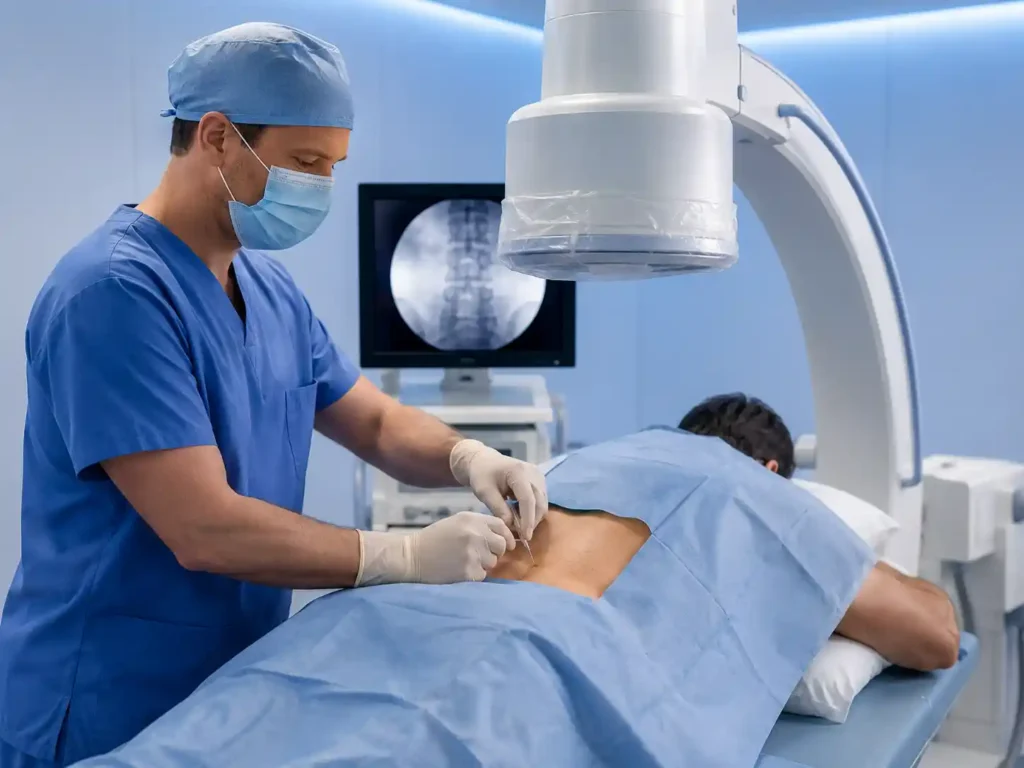
You will lie comfortably on an X-ray table. The injection site is cleaned carefully and a local anesthetic is used to numb the skin — you may feel a brief sting during this step.
Using live X-ray guidance (fluoroscopy), your physician carefully guides a thin needle toward the epidural space. A small amount of contrast dye may be injected to confirm the medication will flow to the intended area. The steroid medication is then delivered near the irritated nerve. In some cases, a local anesthetic is also included.
The procedure itself is often completed in about 15 to 30 minutes, though your full visit may take longer because of preparation and monitoring.
Epidural steroid injections may offer several potential benefits for patients with spine-related nerve pain when used as part of a comprehensive treatment plan.

After the procedure you may be monitored for a short period before going home. You may feel mild soreness at the injection site, or temporary numbness, heaviness, or weakness depending on the medication and area treated.
Do not drive on the day of the injection. Take it easy and avoid strenuous activity or heavy lifting. Mild soreness at the injection site is normal. Follow all aftercare instructions from your care team.
Some patients feel improvement within a few hours from the local anesthetic. For many patients, the steroid medication may take two to seven days to begin working. Relief may last weeks to months.
Many patients can return to light normal activities the next day. Exercise and physical activity should be resumed gradually. Your care team will give specific instructions based on your procedure and condition.
Your response to the injection helps guide next steps. If relief is meaningful, repeat injections or complementary treatments may be discussed. If there is limited improvement, your provider will review other options.
At Kentuckiana Pain Specialists, cancer pain management is approached with compassion, safety, and clear communication. Our team works to understand your pain source, current treatment plan, medication use, and quality-of-life goals, and discusses advanced options when appropriate to improve comfort while supporting your overall cancer care plan.
If you or a loved one is experiencing cancer-related pain, schedule a consultation with Kentuckiana Pain Specialists to discuss advanced pain management options. Call (502) 995-4004 today.