
A minimally invasive option that uses radiofrequency energy to reduce pain signals from targeted nerves, considered after diagnostic testing for selected patients with chronic neck, back, or joint pain.
Radiofrequency Ablation (RFA) is a minimally invasive procedure that uses radiofrequency energy to create controlled heat near specific nerves involved in pain signaling. This heat reduces the nerve’s ability to send pain signals to the brain.
RFA does not correct arthritis, disc degeneration, or joint damage, but it may reduce pain signals from the affected area for some patients.

RFA may be considered after a careful evaluation and diagnostic testing. It may help selected patients with:
Persistent neck pain linked to irritated spinal nerves.
Ongoing lower back pain caused by nerve-related issues.
Pain coming from the small joints of the spine.
Spine pain caused by arthritis or joint degeneration.
Selected SI joint pain cases that respond to nerve treatment.
Pain that improves temporarily after diagnostic nerve blocks.
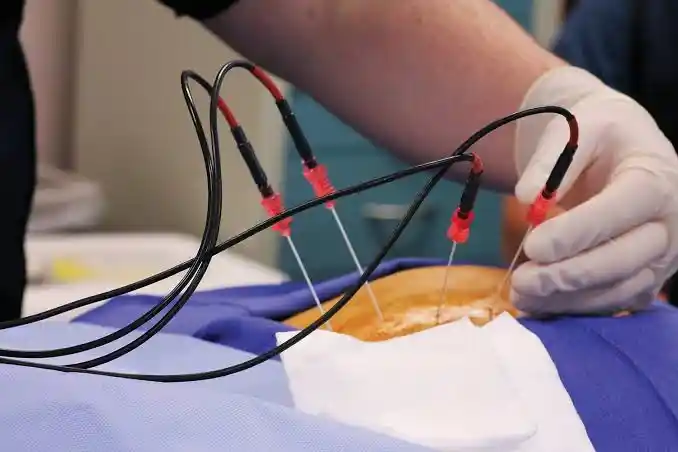
Before Radiofrequency Ablation is recommended, patients may first receive diagnostic nerve blocks to confirm the source of pain. If these blocks provide meaningful temporary relief, RFA may be considered as a longer-lasting treatment option.
During the procedure, Dr. Ajith Nair uses imaging guidance to place a specialized needle near the targeted nerve. Radiofrequency energy is then used to heat the nerve area and reduce pain signals.
The goal of Radiofrequency Ablation is to help reduce pain from targeted nerves, improve movement, and support better daily function. For some patients, pain relief may last for several months or longer, although results can vary and pain may return over time as nerves heal. As with any procedure, there are possible risks, including soreness, bruising, bleeding, infection, temporary numbness, increased pain, nerve irritation, or limited relief.
Recovery is usually straightforward, though relief is not immediate. Here is what most patients can expect after RFA.
Some soreness, stiffness, or a temporary pain increase may occur in the days after RFA.
Pain relief may take several days to a few weeks to develop.
Your care team will provide instructions about activity, medications, and follow-up.
Relief may last several months or longer, but nerves can regenerate and pain may return. Repeat RFA may be discussed if it was helpful.
At Kentuckiana Pain Specialists, cancer pain management is approached with compassion, safety, and clear communication. Our team works to understand your pain source, current treatment plan, medication use, and quality-of-life goals, and discusses advanced options when appropriate to improve comfort while supporting your overall cancer care plan.
If you or a loved one is experiencing cancer-related pain, schedule a consultation with Kentuckiana Pain Specialists to discuss advanced pain management options. Call (502) 995-4004 today.